" width="95px"><path d="M 0 0 L 95 0 L 95 19 L 0 19 Z" fill="transparent" height="19px" id="f141K9XUg" width="95px"/><path d="M 1.906 0 C 2.959 0 3.813 0.863 3.813 1.927 C 3.813 2.992 2.959 3.854 1.906 3.854 C 0.853 3.854 0 2.992 0 1.927 C 0 0.863 0.853 0 1.906 0 Z M 0.254 5.818 L 3.468 5.818 L 3.468 15.233 L 0.254 15.233 Z M 5.737 15.233 L 8.951 15.233 L 8.951 9.727 C 8.951 8.975 9.368 8.149 10.44 8.149 C 11.583 8.149 12.074 8.975 12.074 9.911 L 12.074 15.233 L 15.287 15.233 L 15.287 9.617 C 15.323 8.901 15.759 8.149 16.776 8.149 C 17.92 8.149 18.41 8.975 18.41 9.911 L 18.41 15.233 L 21.624 15.233 L 21.624 9.03 C 21.624 6.405 19.699 5.543 17.992 5.543 C 16.976 5.543 15.886 6.075 14.906 7.268 C 14.252 6.002 12.891 5.543 11.656 5.543 C 10.639 5.543 9.713 6.075 8.987 6.809 L 8.951 6.809 L 8.951 5.818 L 5.737 5.818 Z M 23.621 15.233 L 26.834 15.233 L 26.834 9.727 C 26.834 8.975 27.252 8.149 28.323 8.149 C 29.467 8.149 29.957 8.975 29.957 9.911 L 29.957 15.233 L 33.171 15.233 L 33.171 9.617 C 33.207 8.901 33.643 8.149 34.659 8.149 C 35.803 8.149 36.293 8.975 36.293 9.911 L 36.293 15.233 L 39.507 15.233 L 39.507 9.03 C 39.507 6.405 37.582 5.543 35.876 5.543 C 34.859 5.543 33.77 6.075 32.789 7.268 C 32.136 6.002 30.774 5.543 29.539 5.543 C 28.523 5.543 27.597 6.075 26.871 6.809 L 26.834 6.809 L 26.834 5.818 L 23.621 5.818 Z M 50.927 10.975 C 50.945 10.865 50.945 10.663 50.945 10.535 C 50.945 7.231 48.785 5.543 45.952 5.543 C 43.138 5.543 40.832 7.782 40.832 10.535 C 40.832 13.269 43.138 15.509 45.952 15.509 C 48.022 15.509 49.729 14.829 50.782 13.049 L 48.458 11.875 C 47.677 12.719 47.223 12.921 46.188 12.921 C 45.371 12.921 44.173 12.425 44.173 10.975 Z M 44.264 9.177 C 44.318 8.314 44.936 7.653 46.043 7.653 C 46.987 7.653 47.659 8.186 47.804 9.177 Z M 52.416 15.233 L 55.629 15.233 L 55.629 10.278 C 55.629 10.039 55.865 8.369 57.536 8.369 C 58.607 8.369 59.206 8.883 59.206 8.883 L 60.55 6.13 C 60.55 6.13 59.714 5.543 58.516 5.543 C 56.682 5.543 55.666 7.176 55.666 7.176 L 55.629 7.176 L 55.629 5.818 L 52.416 5.818 Z M 65.361 5.543 C 62.91 5.543 61.294 6.644 61.294 8.571 C 61.294 9.984 62.238 10.645 63.182 11.14 C 64.235 11.691 65.252 11.746 65.252 12.425 C 65.252 13.049 64.707 13.104 64.253 13.104 C 63.219 13.104 61.948 12.021 61.948 12.021 L 60.64 14.242 C 60.64 14.242 61.984 15.509 64.235 15.509 C 66.142 15.509 68.647 15.068 68.647 12.297 C 68.647 10.37 67.049 9.672 65.815 9.287 C 65.016 9.03 64.362 8.883 64.362 8.387 C 64.362 7.947 64.653 7.818 65.361 7.818 C 66.341 7.818 67.431 8.406 67.431 8.406 L 68.484 6.277 C 68.484 6.277 67.158 5.543 65.361 5.543 Z M 71.897 0 C 72.95 0 73.803 0.863 73.803 1.927 C 73.803 2.992 72.95 3.854 71.897 3.854 C 70.844 3.854 69.991 2.992 69.991 1.927 C 69.991 0.863 70.844 0 71.897 0 Z M 70.245 5.818 L 75.404 5.811 C 75.404 5.811 71.946 6.741 71.921 10.426 C 71.895 14.377 75.847 15.199 75.847 15.199 L 70.245 15.233 Z M 79.103 15.205 L 84.633 15.208 L 84.633 9.886 C 84.633 8.95 85.577 8.05 86.54 8.05 C 87.575 8.05 88.21 8.95 88.21 9.886 L 88.21 15.208 L 91.424 15.208 L 91.424 9.005 C 91.424 6.38 89.045 5.517 87.338 5.517 C 86.322 5.517 85.396 6.05 84.67 6.784 L 84.633 6.784 L 84.633 5.793 L 79.449 5.814 C 79.449 5.814 83.03 6.545 83.134 10.416 C 83.233 14.115 79.103 15.205 79.103 15.205 Z" fill="rgb(243, 241, 249)" height="15.508518576655096px" id="BrOY0jDQO" transform="translate(1.611 1.675)" width="91.42354276158623px"/><path d="M 1.906 0 C 2.959 0 3.813 0.863 3.813 1.927 C 3.813 2.992 2.959 3.854 1.906 3.854 C 0.853 3.854 0 2.992 0 1.927 C 0 0.863 0.853 0 1.906 0 Z" fill="rgb(70, 112, 205)" height="3.854188048636182px" id="yIBDdP8YK" transform="translate(77.207 10.186)" width="3.8127090301003363px"/></g></svg>)
Value Measurement vs. Facial Coding
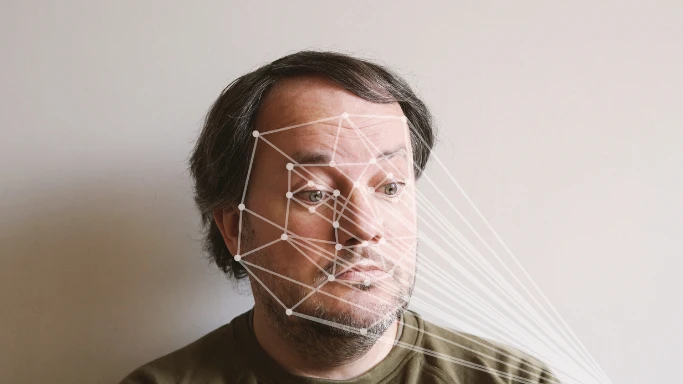
Facial coding (FC) is a neuromarketing technique purported to measure emotional reactions by tracking consumers’ changing facial expressions as they engage with content or an experience.***
***NOTE: Facial Coding has been debunked by numerous studies conducted by Dr. Lisa Feldman Barrett and others. As she noted, "if you’re trying to build software or technology to identify scowls or frowns and pouts and so on and assume that means anger, good luck." Learn more about the challenges to Facial Coding.
WHAT IS FACIAL CODING?
Facial Coding claims to make an educated guess about which emotions are being shown by a person.
Facial Coding is founded on academic research conducted by facial expression expert, Paul Ekman, who purports that all humans share 7 universal emotional expressions: Happiness, Sadness, Surprise, Anger, Fear, Disgust, and Contempt. Ekman adapted a system for coding the presence of these facial expressions, called the facial action coding system (FACS), and he offers a certification program where individuals can be trained to code these expressions by watching for the activation of specific facial muscles. Despite the rich history of facial coding, much of this theory has been disproven, and emotions do not seem to be as universal as claimed.
As a neuromarketing methodology, facial coding involves using consumers’ own webcams to record their facial reactions. These recordings are then processed using automated algorithms designed to detect movement in facial muscles linked to Ekman’s 7 universal emotional expressions.
Facial coding results are typically output in aggregate, with metrics conveying the proportion of consumers who showed each of the emotions at some point during the experience. Output also typically includes a line graph depicting the proportion of consumers who expressed each emotion at varying points of the experience.
The Benefit
Facial Coding is a relatively affordable option in terms of neuromarketing solutions.
Facial Coding is relatively non-invasive since the cameras are simply looking at participants' faces, instead of requiring an uncomfortable cap of electrodes or awkward finger sensors.
Some software for Facial Coding does not require participants to be in a lab environment.
The Drawback
In recent research, several experts have contested the accuracy of Facial Coding. This research indicates that facial expressions are likely a poor indicator of true emotional experiences and a weak predictor of future behavior.
Facial Coding requires very specific environments to properly work with webcams. Consumers must watch in front of their computer, in a place with good lighting, and sit very still so as not to disturb the initial calibration.
Facial coding does not work well on non-white participants and is not culturally universal, thus it is not a good option for accurate market testing.
Facial Coding can be faked. Research has found that responses can be to some extent controlled by humans and therefore the results might be intentionally or unintentionally falsified.
Due to the challenges of using individual webcams, a good portion of Facial Coding data, especially when used by software, is considered "bad data" and must be thrown out. This requires companies to over-recruit to make up for the loss, and means you pay for data you can't use.
The intensity of facial expressions can vary by culture and societal norms, which can impact results.
How Value Measurement is Different
Value Measurement is not based on what expressions are made externally while a person is having an experience, but rather what is actually going inside the brain, second-by-second. These results let you predict your audience’s future behavior with over 80% accuracy so you can confidently make impactful decisions.
Value Measurement data is clear, direct, and provides actionable insights. Because you can measure the value delivered by any experience in real-time, in the real world, it ensures the integrity of your results.
Facial Coding is simple, free, and bullish*t. There are over 1,000 open source libraries to add facial coding to your project and it has become very popular for research technology companies. But the core science is bad, and the results are meaningless. Sorry, not sorry.
Dinner party fact for brain nerds
The human face has 43 different facial muscles that work together to create over 10,000 facial expressions. Facial Coding attempts to identify and understand 7 of these as "universal expressions".
(Makes you wonder what the other 9,993 expressions mean...)

Is Facial Coding a Value Measurement?
How does this tool compare to Value Measurement when you really dig into the features….
Feels like magic, because it is good science
Using everyday wearable devices, we can infer the simultaneous release of oxytocin and dopamine throughout the day.

Join the Value Measurement Movement
What are you waiting for? Value Measurement lets you identify what people authentically care about and will act on, moment-by-moment, removing all bias from the equation. Download our Value Measurement Manifesto and join the movement today!